What is Federated Learning?
I want to explain federated learning, a technique that completely changes how we think about training machine learning models. Instead of sending your data to a company's server, the model comes to your device. It learns from your data locally, then only sends back the improvements. Your data never leaves your device. In this essay, I'll show you how federated learning solves the fundamental tension between model accuracy and data privacy, enabling AI to improve while keeping you in control of your data.
Introduction
With increasing awareness about data espionage by tech giants and governments, I've become skeptical about data stored on our devices. This concern creates a fundamental challenge for artificial intelligence. Data is the fuel for AI, yet I'm reluctant to share it.
Machine learning models require data to improve accuracy. But why would I share my data? It could be private, sensitive, or harmful if disclosed. This creates a critical question: How can machine learning models improve without trading off data privacy for prediction accuracy?
The answer lies in decentralized machine learning, specifically a technique called Federated Learning.
Background: The Problem with Centralized Learning
Traditional Machine Learning Architecture
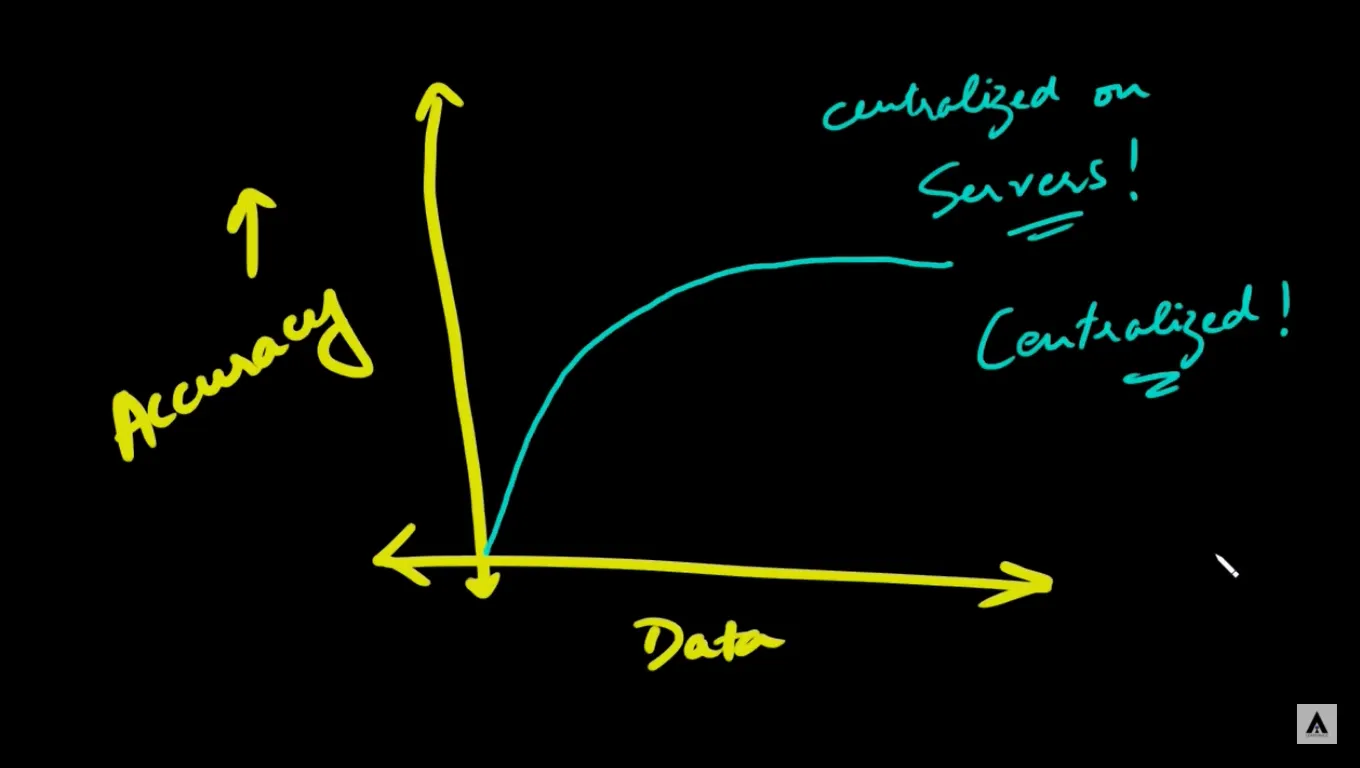
Standard machine learning approaches require centralizing training data on one machine or in a data center. This means your data is stored somewhere on a company's server, located somewhere on this planet.
Your data literally sits on their servers. While technically yours, as long as it resides on their infrastructure, they can do whatever they want with it. You are not in control, strictly speaking.
Privacy and Sovereignty Concerns
This centralized approach raises several critical issues:
- Loss of Control: Data leaves your device permanently
- Privacy Risks: Centralized data becomes an attractive target for breaches
- Trust Requirements: Users must trust companies to handle data responsibly
- Regulatory Challenges: Cross-border data transfer complicates compliance
- Single Point of Failure: Central servers represent vulnerability
The Federated Learning Solution
Inverting the Paradigm
Federated learning inverts the traditional approach: instead of migrating your data to their servers, they migrate a machine learning model to your device. This happens when your device is idle—probably when you're charging it overnight.
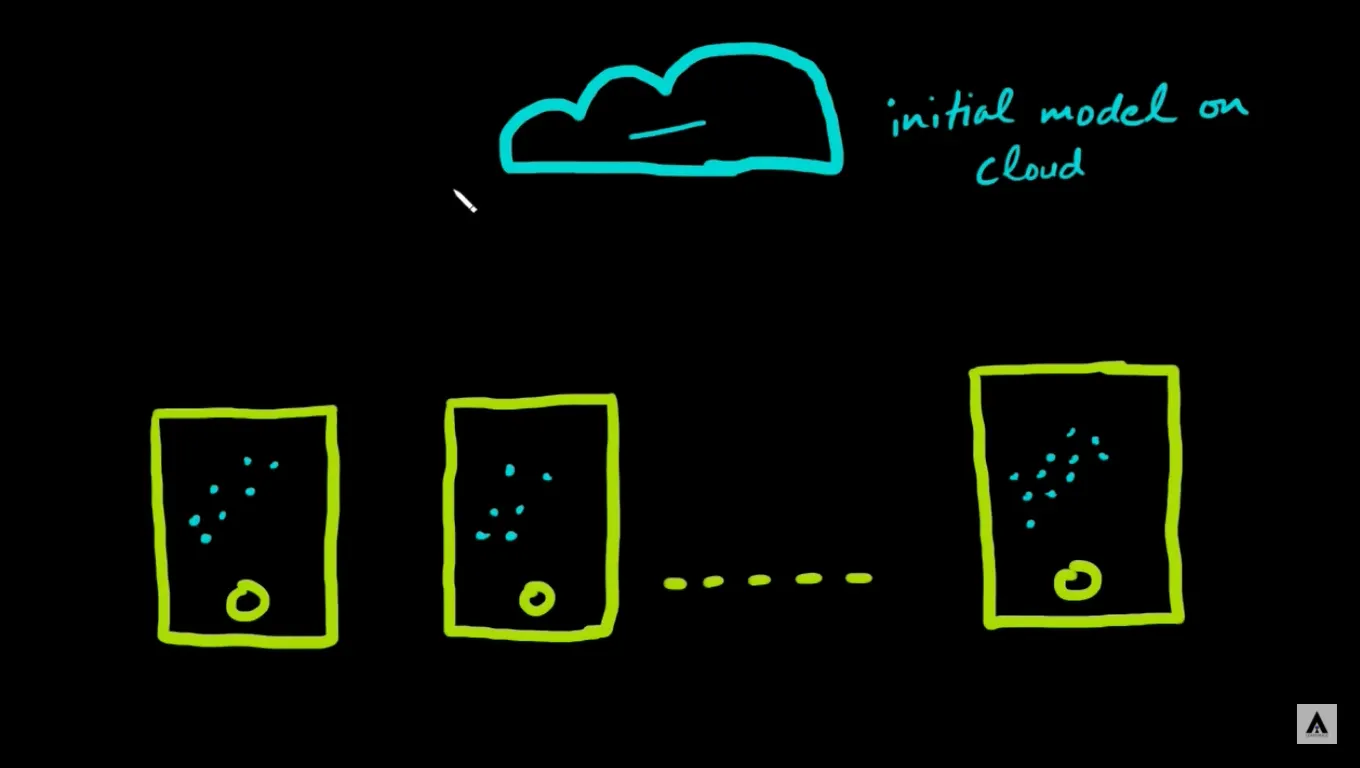
The key insight: data stays on your device while the model does the traveling.
The Federated Learning Workflow
Step 1: Model Distribution
Your device downloads the current model. A Google engineer (or any ML team) creates a machine learning model for prediction, then deploys it to the cloud. From there, edge devices (phones, tablets, IoT devices) download this model.
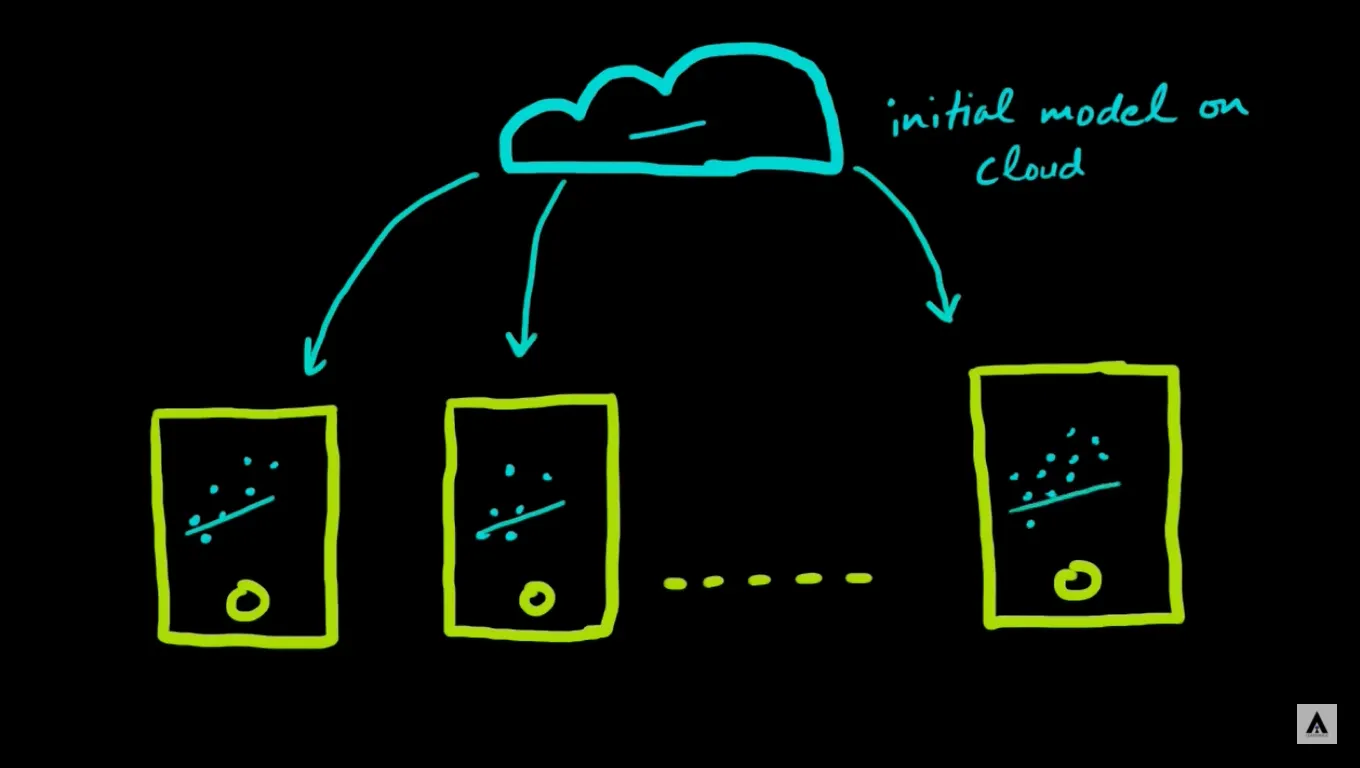
Edge devices is the technical term for your phones, tablets, or any device at the network's edge (in your hands).
Step 2: Local Training
The downloaded model improves itself by learning from data on your phone, then summarizes the changes as a small, focused update. With more local data, the model learns and improves. But this happens entirely on your device.
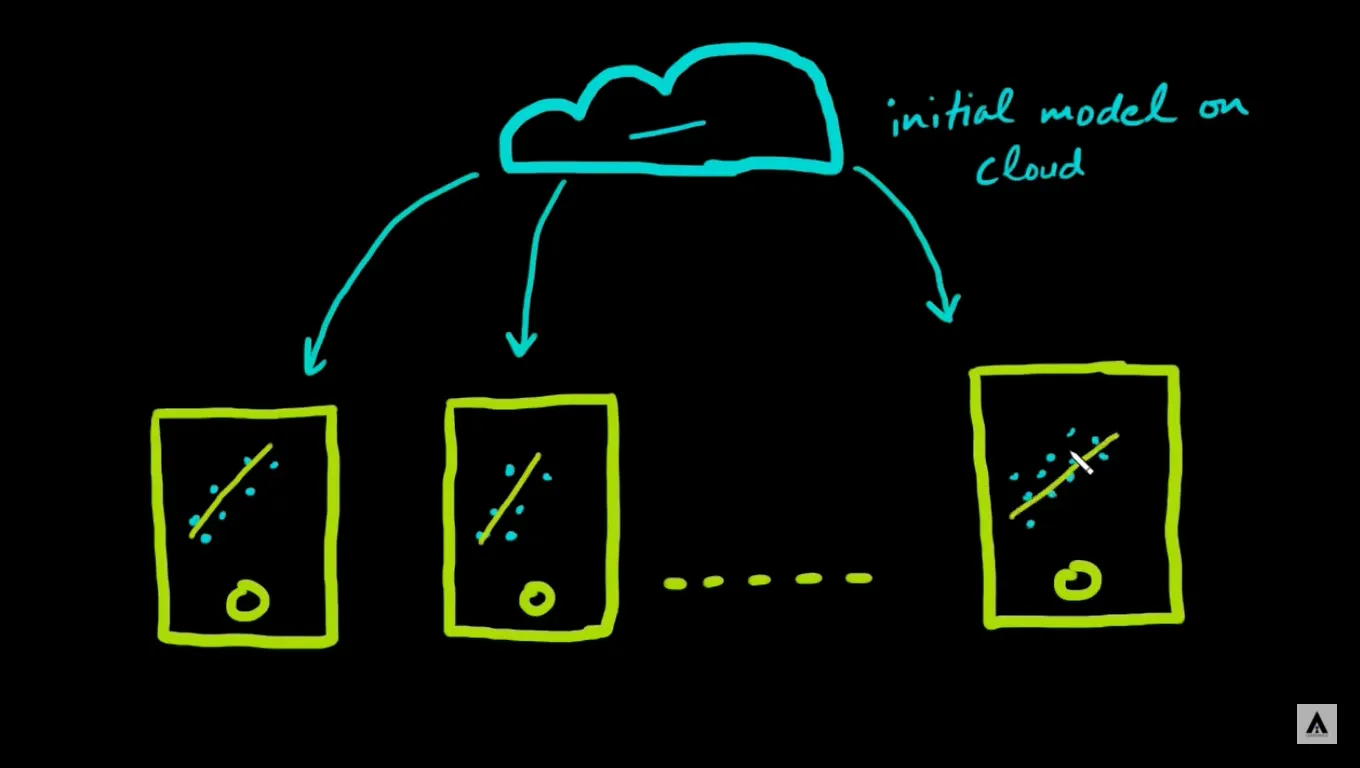
Key point: The raw data never leaves your device. Only the model's learned improvements are prepared for sharing.
Step 3: Secure Aggregation
Only the update to the model is sent back to the cloud using encrypted communication. This update is immediately averaged with other user updates to improve the shared model.
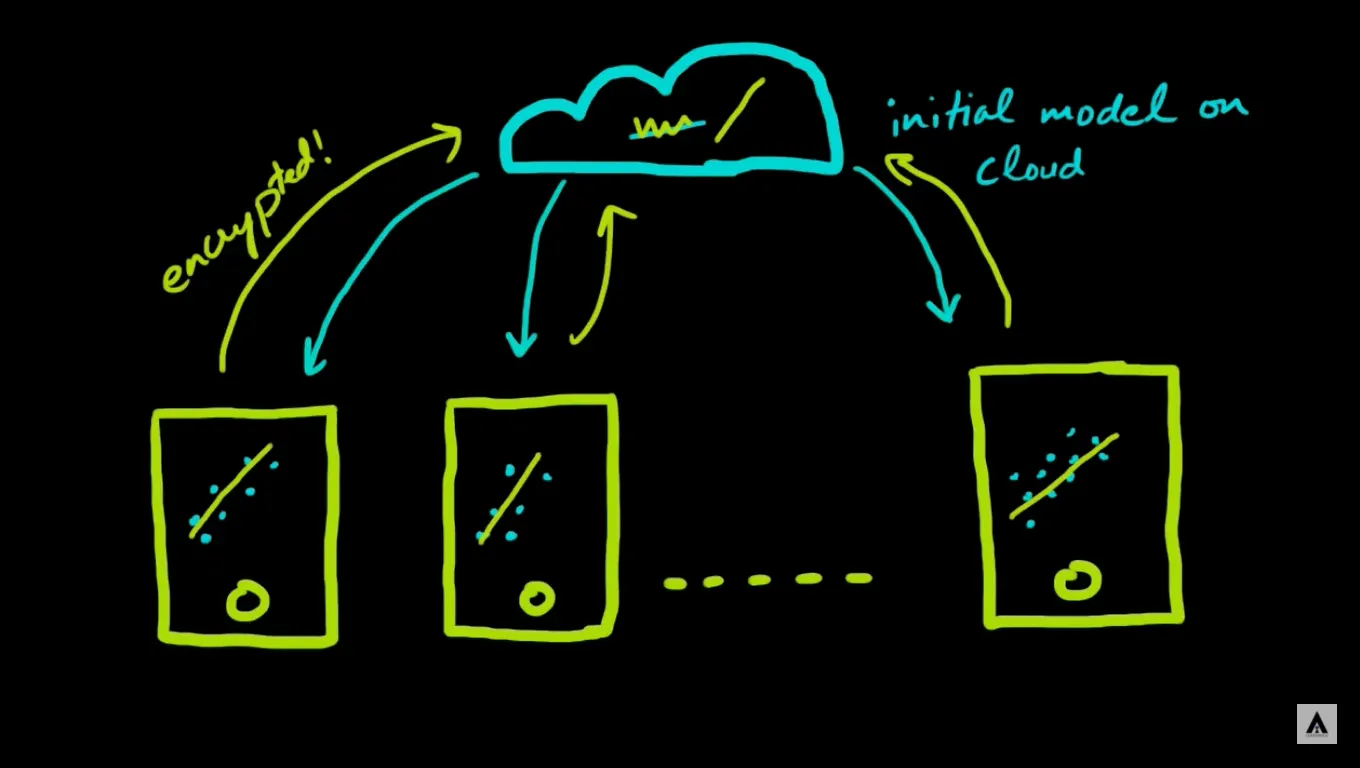
Critical guarantees:
- All training data remains on your device
- No individual updates are stored in the cloud
- Updates are encrypted during transmission
- Only aggregated improvements are retained
Discussion: Decentralization and Data Sovereignty
Why This Matters
As you can see, data is not centralized in one place. Your data stays with you, and my data stays with me. All our data is spread across all users—the data is decentralized. This is why we call this decentralized machine learning.
Key Advantages
Privacy Preservation:
- Raw data never leaves your device
- Only learned patterns (model updates) are shared
- No central repository of personal information
Data Sovereignty:
- Users maintain control over their data
- Compliance with data localization requirements
- Reduced liability for service providers
Improved Security:
- No central honeypot for attackers
- Distributed architecture reduces breach impact
- Encrypted communication channels
Better Models:
- Access to diverse, distributed data
- Training on real-world, in-situ data
- Capturing edge cases and local patterns
Challenges and Considerations
Communication Costs:
- Model updates must be transmitted frequently
- Bandwidth constraints on mobile devices
- Coordination overhead for aggregation
Heterogeneous Devices:
- Varying computational capabilities
- Different data distributions across devices
- Intermittent connectivity and availability
Model Privacy:
- Updates can still leak information
- Requires additional privacy mechanisms (differential privacy, secure aggregation)
- Balancing update granularity with privacy
Practical Applications
Federated learning enables privacy-preserving machine learning across numerous domains:
Mobile Keyboards: Improving text prediction without accessing your messages
Healthcare: Training diagnostic models across hospitals without sharing patient data
Financial Services: Fraud detection across institutions without exposing transactions
IoT Devices: Smart home learning without uploading sensor data
Collaborative Research: Multi-institutional studies preserving data sovereignty
Conclusion
Federated learning represents a fundamental shift in how I think about machine learning and data privacy. By migrating models to data rather than data to models, I preserve user privacy while maintaining model performance.
This paradigm addresses the critical tension between model accuracy and data privacy. Users maintain sovereignty over their information, while collectively contributing to improved AI systems. I no longer have to choose between privacy and progress. Federated learning offers both.
As concerns about data privacy intensify and regulations tighten, federated learning provides a path forward for responsible AI development. The data stays where it belongs (with you) while the collective intelligence grows through secure, privacy-preserving collaboration.
The future of machine learning is decentralized, and federated learning shows us how to get there.