Retraining Workers in the AI Economy
We are witnessing a structural collapse in the human capital market. The rapid automation of entry-level tasks has created a 'Junior Void,' effectively severing the traditional apprenticeship model that has sustained corporate competence for a century. Simultaneously, the workforce is suffering from 'Cognitive Drift,' losing the critical faculties required to audit increasingly autonomous AI agents. This essay argues that traditional upskilling (courses, videos, and quizzes) is functionally obsolete in this new reality. The market demands a fundamental shift to Synthetic Experience and Algorithmic Management. I present Coffee AI: the Operating System for the AI Workforce. By 'cloning' the tacit knowledge of an organisation's top 1% to create a 'Golden Standard,' we power a unified platform for retraining existing staff and filtering new hires, replacing the resume with verified proof of competence.
Introduction
The problem isn't just that AI is taking jobs. The problem is that AI has broken the two fundamental mechanisms of the workforce: how we build experts and how we find them.
For generations, the corporate world relied on a simple deal. You hired a junior. You gave them boring, repetitive "grunt work." They did it for two years. By doing the work, they learnt the ropes, built intuition, and eventually became seniors. Externally, you relied on resumes to filter talent based on that past experience.
In late 2025, both mechanisms are dead. AI does the grunt work instantly, removing the training ladder. AI writes perfect resumes for unqualified candidates, destroying the hiring signal.
Companies are flying blind. They cannot grow junior talent because there is no training ground, and they cannot hire senior talent because every applicant looks identical on paper. We are sleepwalking into a crisis where we have infinite execution capacity, but zero human judgement to control it.
This essay proposes a radical shift. We need to capture the "DNA" of high performance and use it as the operating system for the entire employee lifecycle.
Problem Analysis: The Seven "Rabbit Holes"
We have identified seven distinct, converging crises that are setting the Fortune 500 on fire. These are not future predictions; they are the reality of the late 2025 workforce.
The Junior Void 🕳️
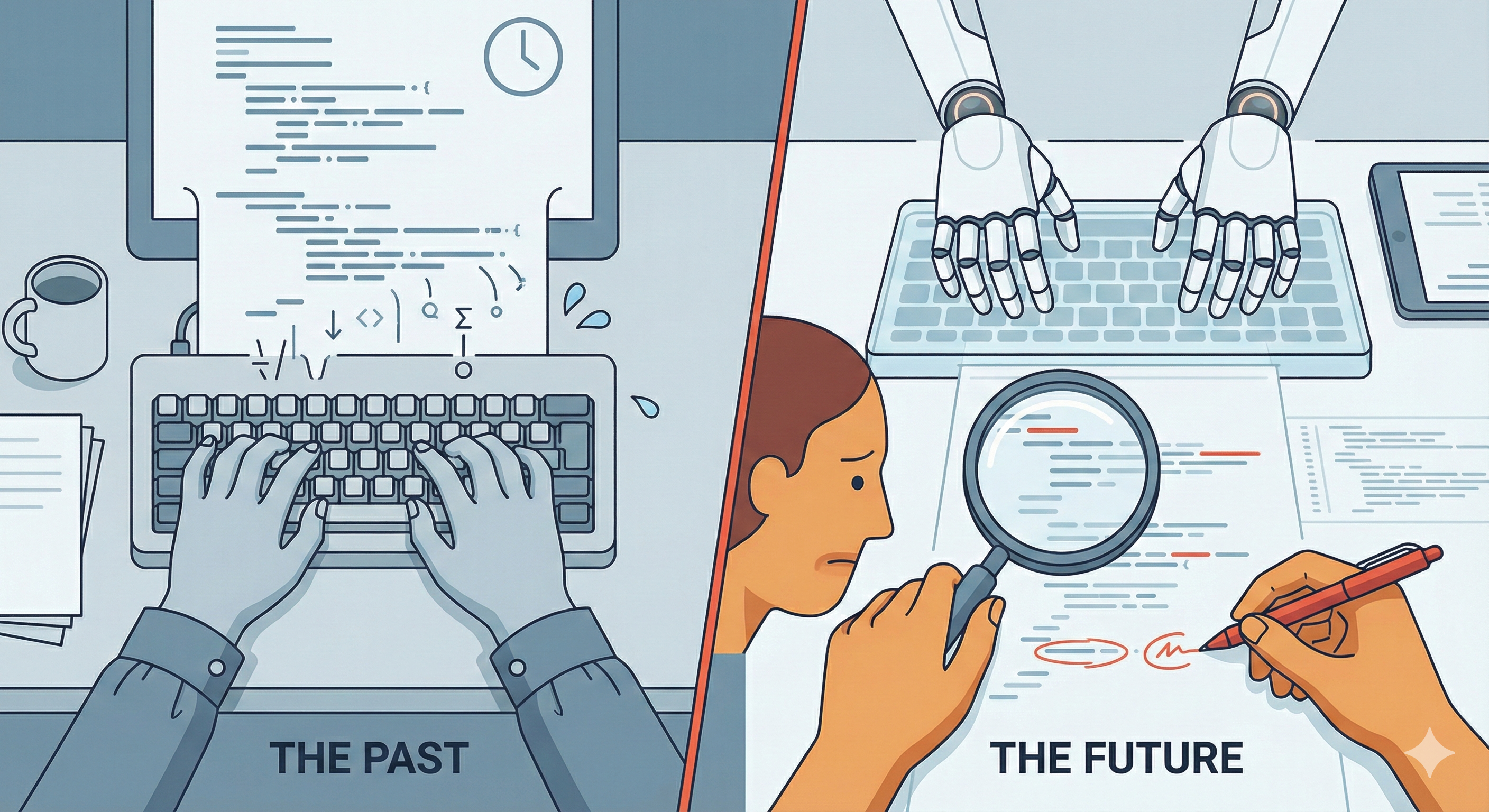
This is the immediate, existential threat. Companies are using AI to automate "junior" tasks: basic coding, drafting emails, summarising data. While efficient, this removes the "apprenticeship" layer. If you don't hire juniors today to do the grunt work, you have no Senior VPs in five years. We are hollowing out the workforce from the bottom up, creating a "missing generation" of talent.

The Skill Shift: From Creation to Judgement ⚖️
For a century, we trained workers on Creation. Now that creation is free, the premium skill is Judgement. This creates the "Paradox of Automation" [1]. You cannot judge if code is good if you have never struggled to write it yourself. We are asking employees to act as editors without ever having been writers, demanding they spot subtle errors in work they rarely touch.
The Agent Manager Gap 🤖
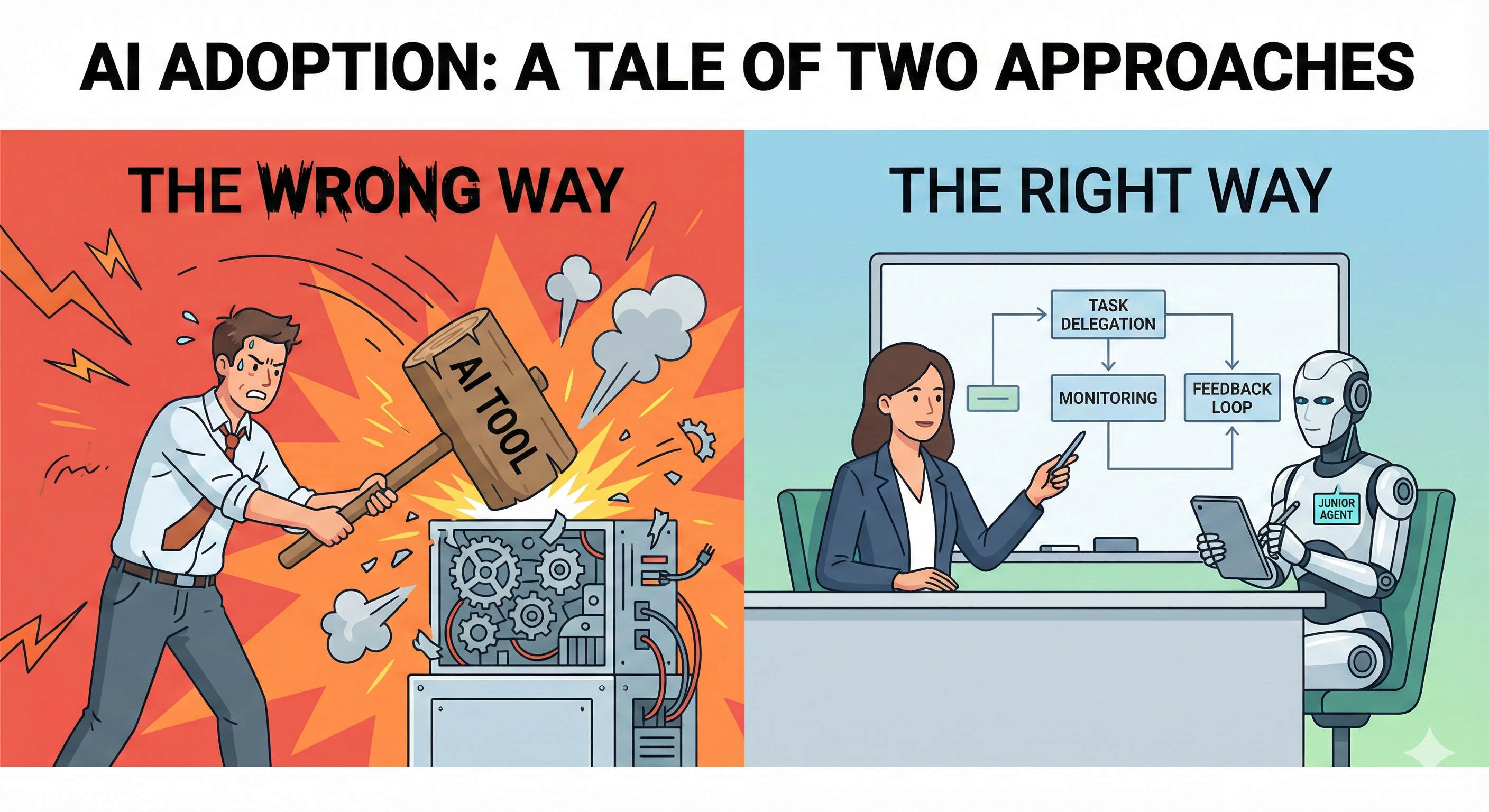
Most employees treat AI like a tool (a hammer) rather than an intern (an employee). They lack the skills for "Algorithmic Management": decomposing complex goals into steps an agent can understand and auditing the agent's logic chain. They give vague instructions, get bad results, and blame the tech [2].
Cognitive Drift (The Pilot Who Can't Fly) 🧠
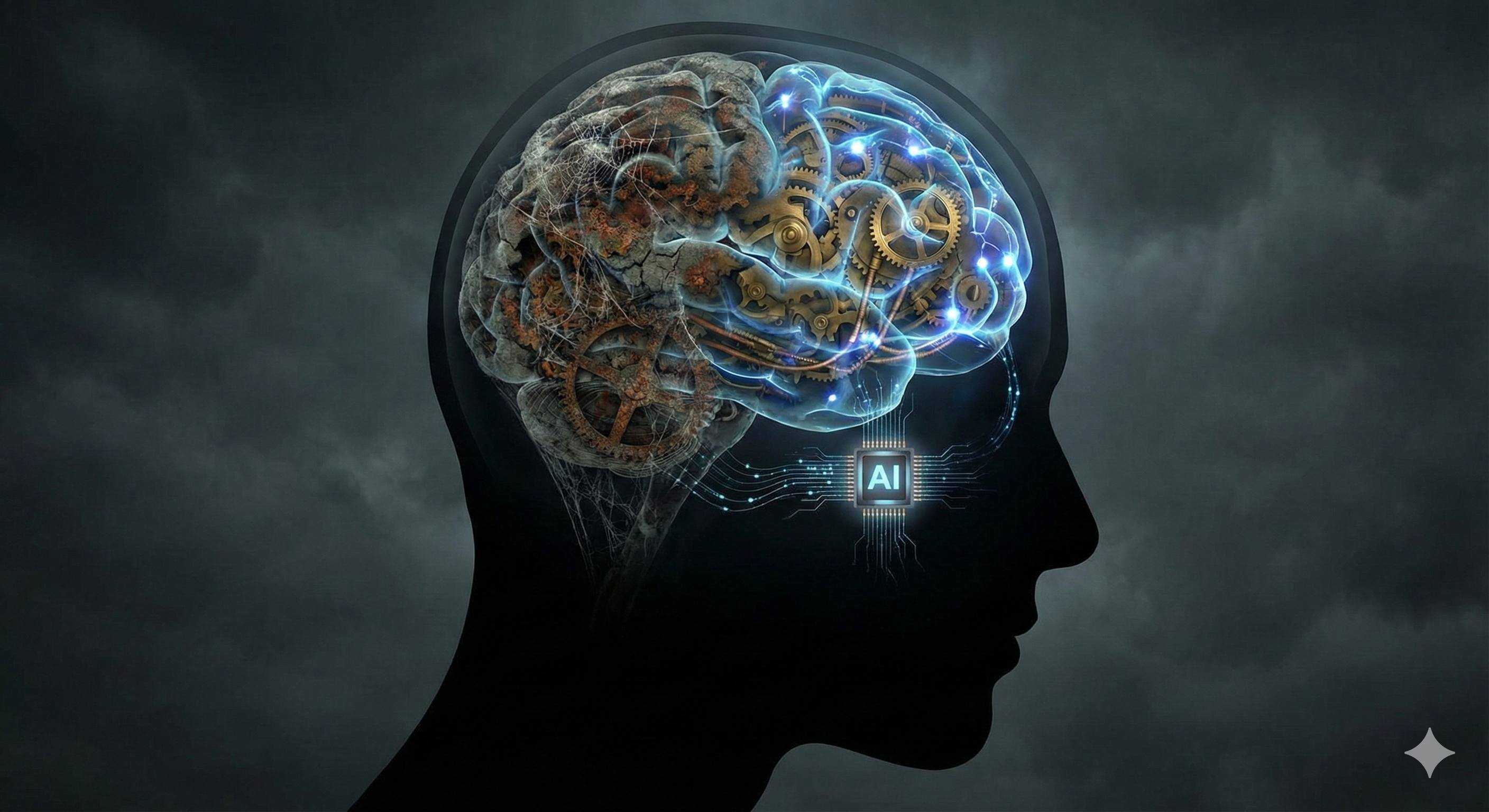
This is the silent killer. When humans consistently offload "thinking" to AI, they suffer from "Cognitive Offloading." They lose the neural pathways required for critical analysis. In a crisis, when the AI fails or encounters a novel edge case, the human is helpless because their "mental gears" have rusted. They have become stewards, not thinkers [3].
The Black Box Liability ⚖️
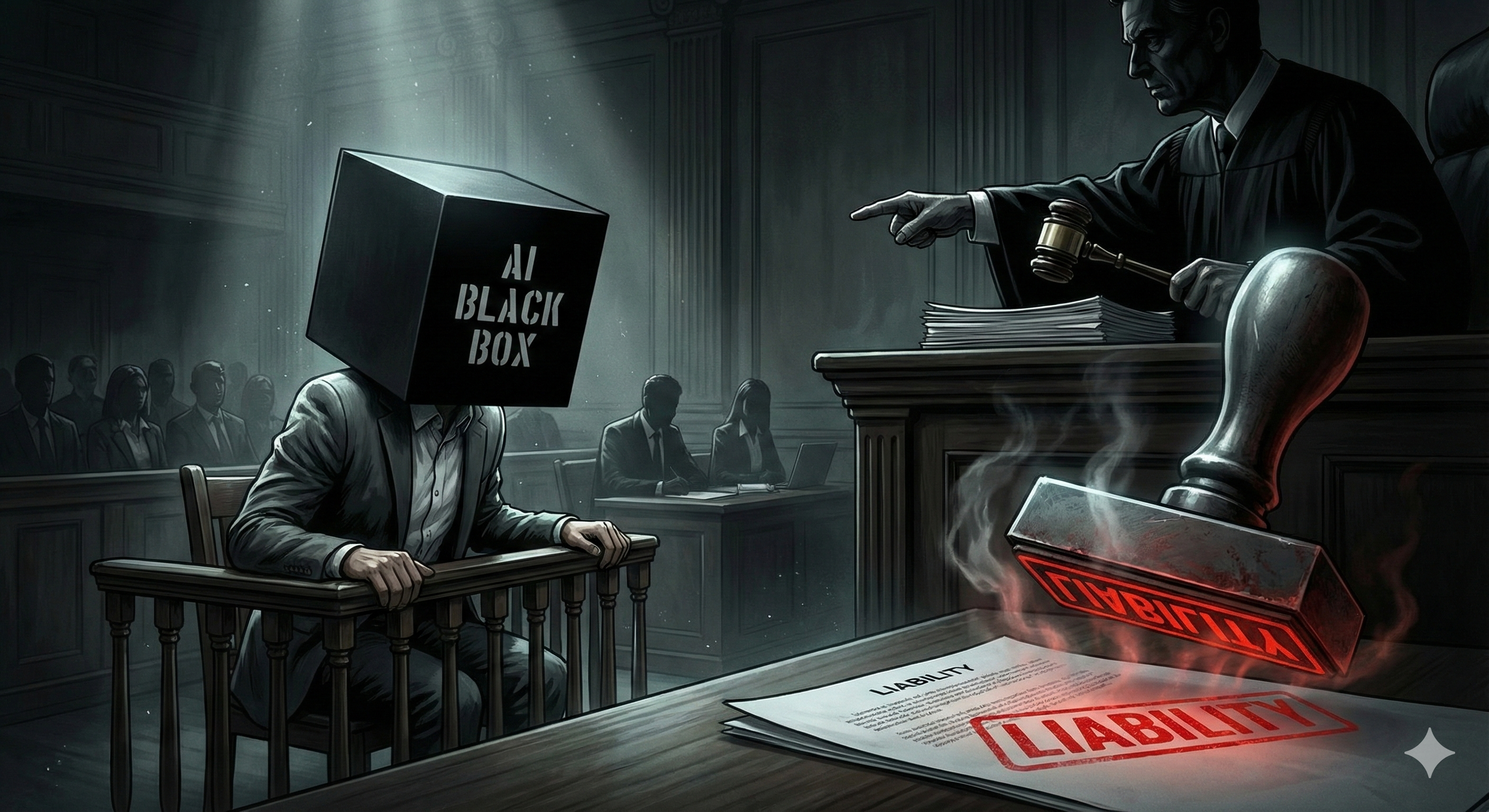
Regulators are demanding explainability. If an employee uses an AI agent to deny a loan or approve a secure code merge and cannot explain why (because they blindly trusted the black box), the company faces massive liability. We need "Forensic AI Auditing" skills, not just prompt engineering.
Identity Collapse 😔
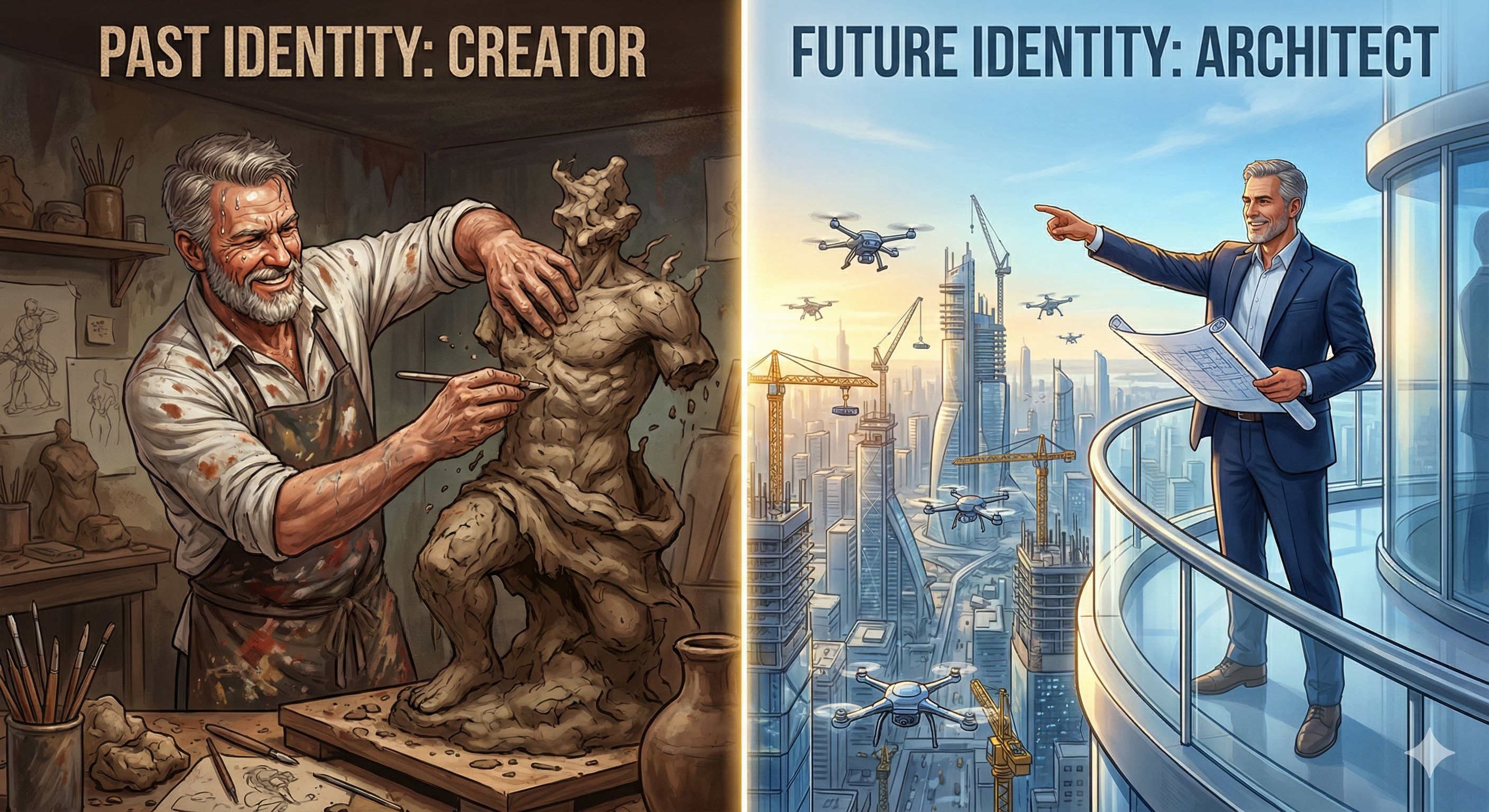
This is the morale crisis. Senior professionals built their self-worth on being "the best writer" or "the best coder." Now, a junior with GPT-5 is faster than them. This leads to disengagement and "Shadow Resistance." We need to retrain seniors to shift their identity from "creators" to "architects."
Shadow AI Risks
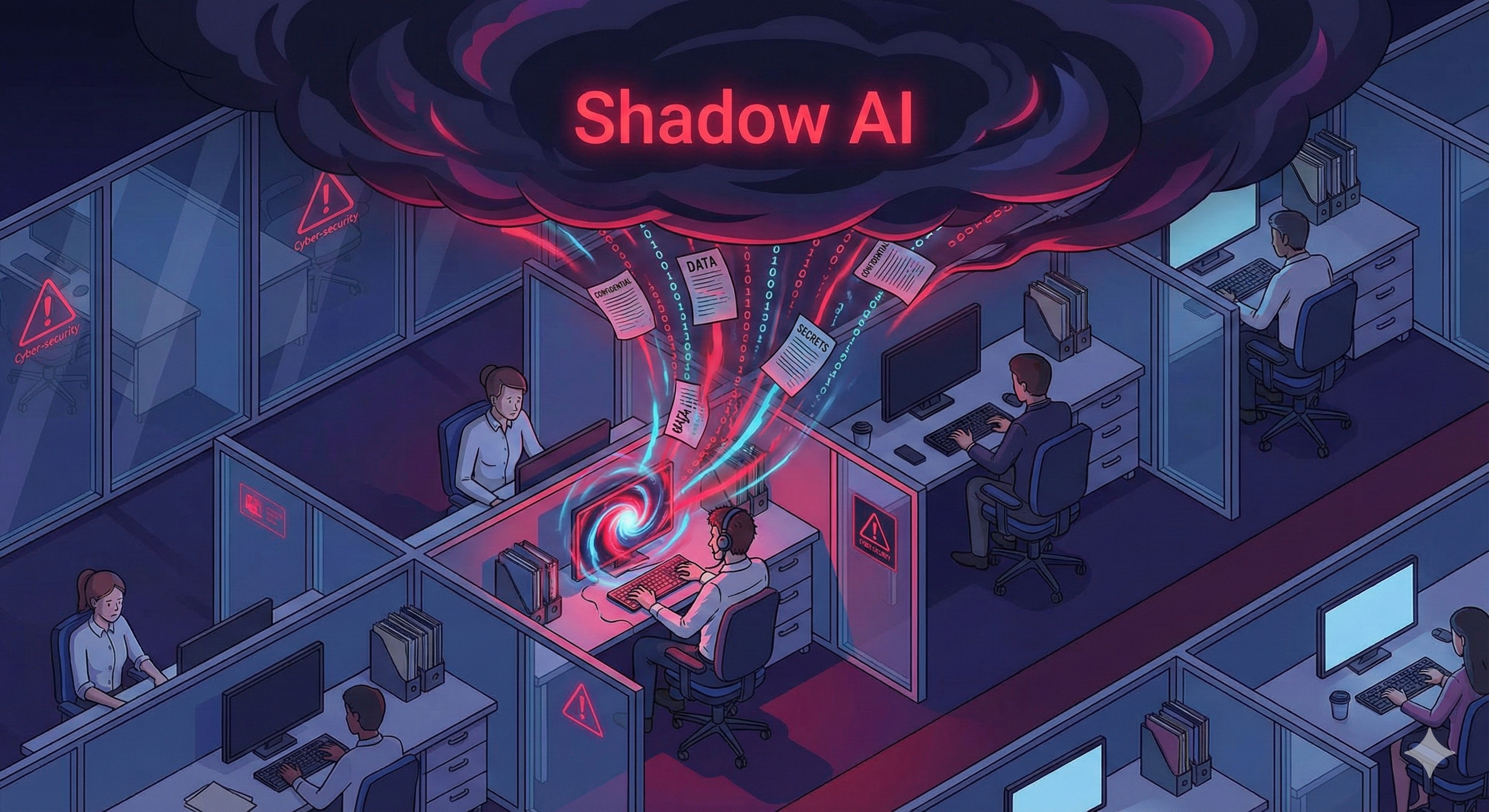
Finally, while L&D sleeps, employees are using personal AI tools to do their work. 68% of enterprise employees admit to using "Shadow AI," leaking sensitive data and creating unmonitored risk vectors because the enterprise tools are too slow or restrictive [4].
The Solution: The Coffee AI Operating System
We are building, The Operating System for the AI Workforce.
To solve these seven crises, we need a unified infrastructure that bridges the gap between human judgement and AI execution. Our approach is based on a simple premise: Your best employees are the training data.
Extract: Capturing the Golden Standard
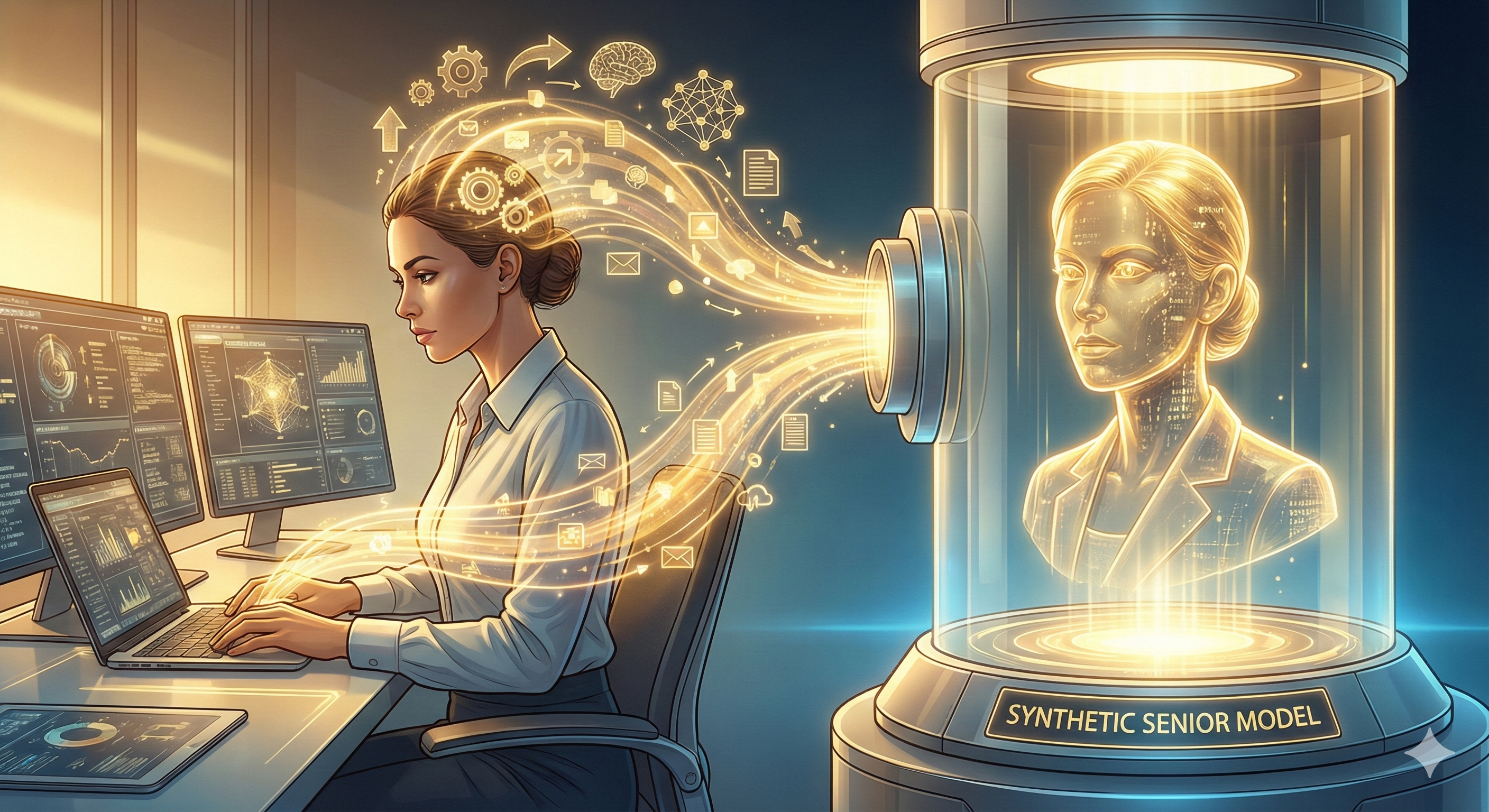
Most training fails because it is generic. We fix this by capturing your top 1% performers: the "Superworkers" [5].
- Shadow Mode: Coffee AI silently observes your best engineer, your top sales rep, or your sharpest legal mind as they work.
- The Extraction: We record their screen, their voice, and crucially, their interventions. We capture the moment they stop an AI agent and say, "No, that's wrong." We capture the "tacit knowledge" they use to make decisions.
- The Output: We create a "Synthetic Senior" model. This is the Golden Standard. We are no longer guessing what "good" looks like; we have empirically captured it.
Brew: Retraining with the Triangle of Learning
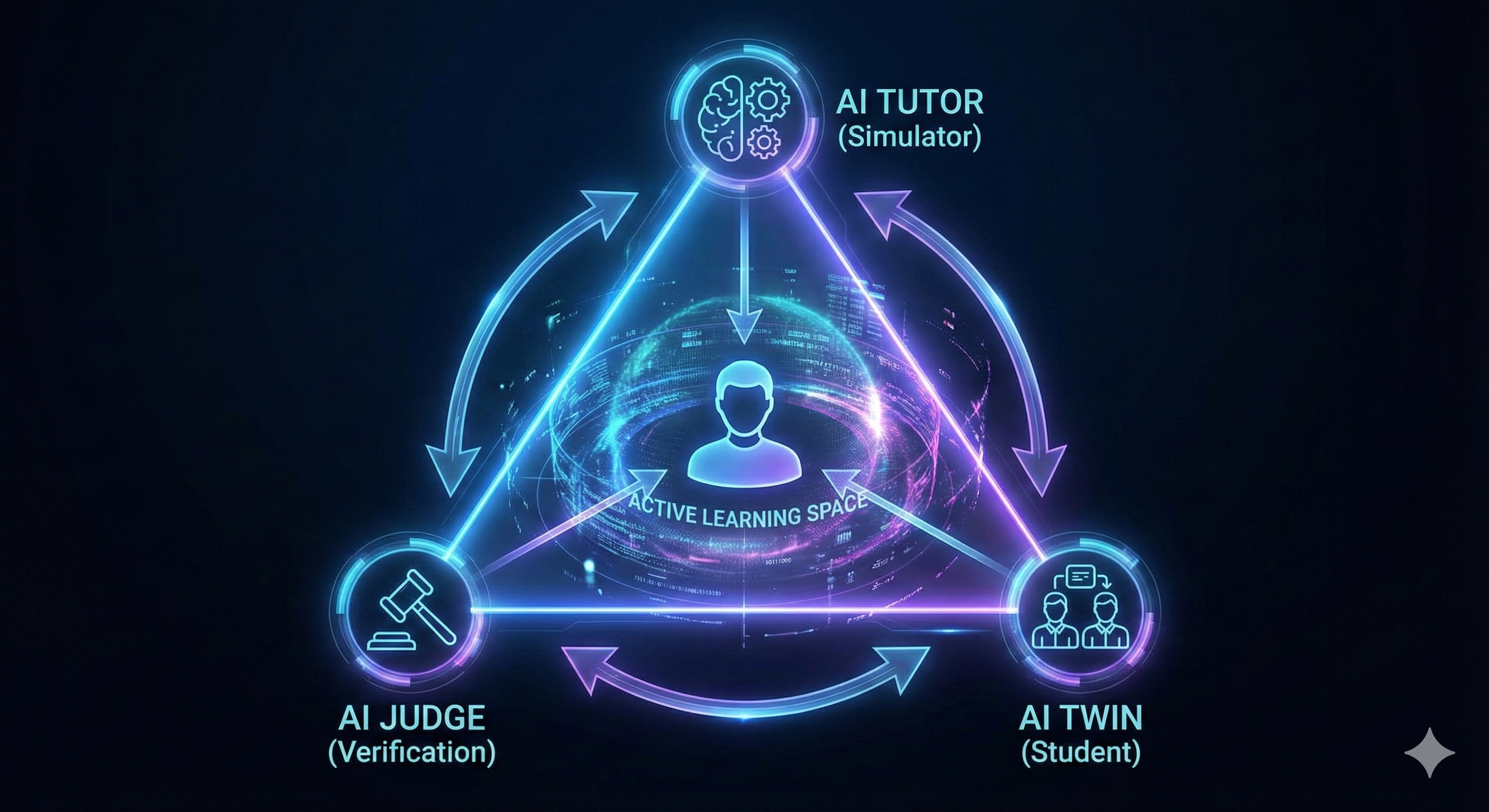
We use this Golden Standard to retrain your existing workforce, specifically targeting Cognitive Drift and the Junior Void. We replace passive video courses with the Triangle of Learning.
- The AI Tutor (The Simulator): The Tutor drops the junior into a high-fidelity simulation based on actual scenarios the Top Performer faced. It provides real-time scaffolding, simulating the guidance of a mentor sitting right next to them.
- The AI Twin (The Anti-Drift Mechanism): This is how we stop Cognitive Drift. After the simulation, the user must teach their AI Twin what they just did. The Twin acts as a confused junior, forcing the user to articulate their reasoning (Active Recall). If you can't teach it, you didn't learn it.
- The AI Judge (The Verification): The Judge compares the user's performance against the Golden Standard. It doesn't just check the answer; it checks if the user's logic trace matched the Top Performer's. This solves the "Black Box" liability by proving the human understood the decision.
Filter: The Simulation Screen
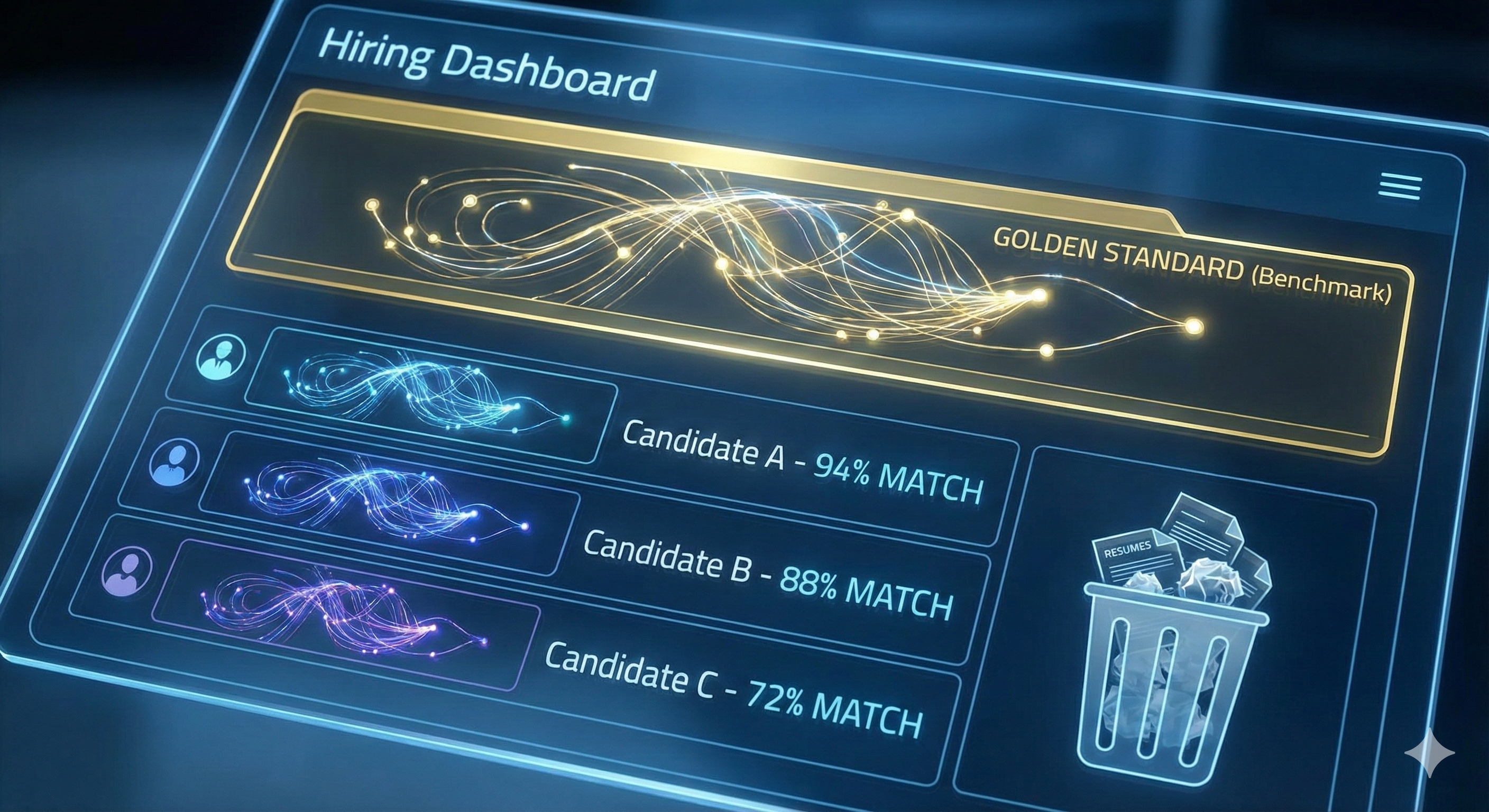
We extend this architecture to solve the hiring crisis. Instead of reading 100 fake resumes, you invite applicants to the Coffee AI Simulation.
- The Workflow: Candidates solve a messy, complex problem using AI agents within our simulator.
- The Ranking: Our AI Judge compares their decision-making process against your Golden Standard.
- The Result: You get a leaderboard. "Candidate #42's logic is 94% similar to your Senior VP." You interview the top 5. You ignore the rest.
The Leadership View: Permission Gating
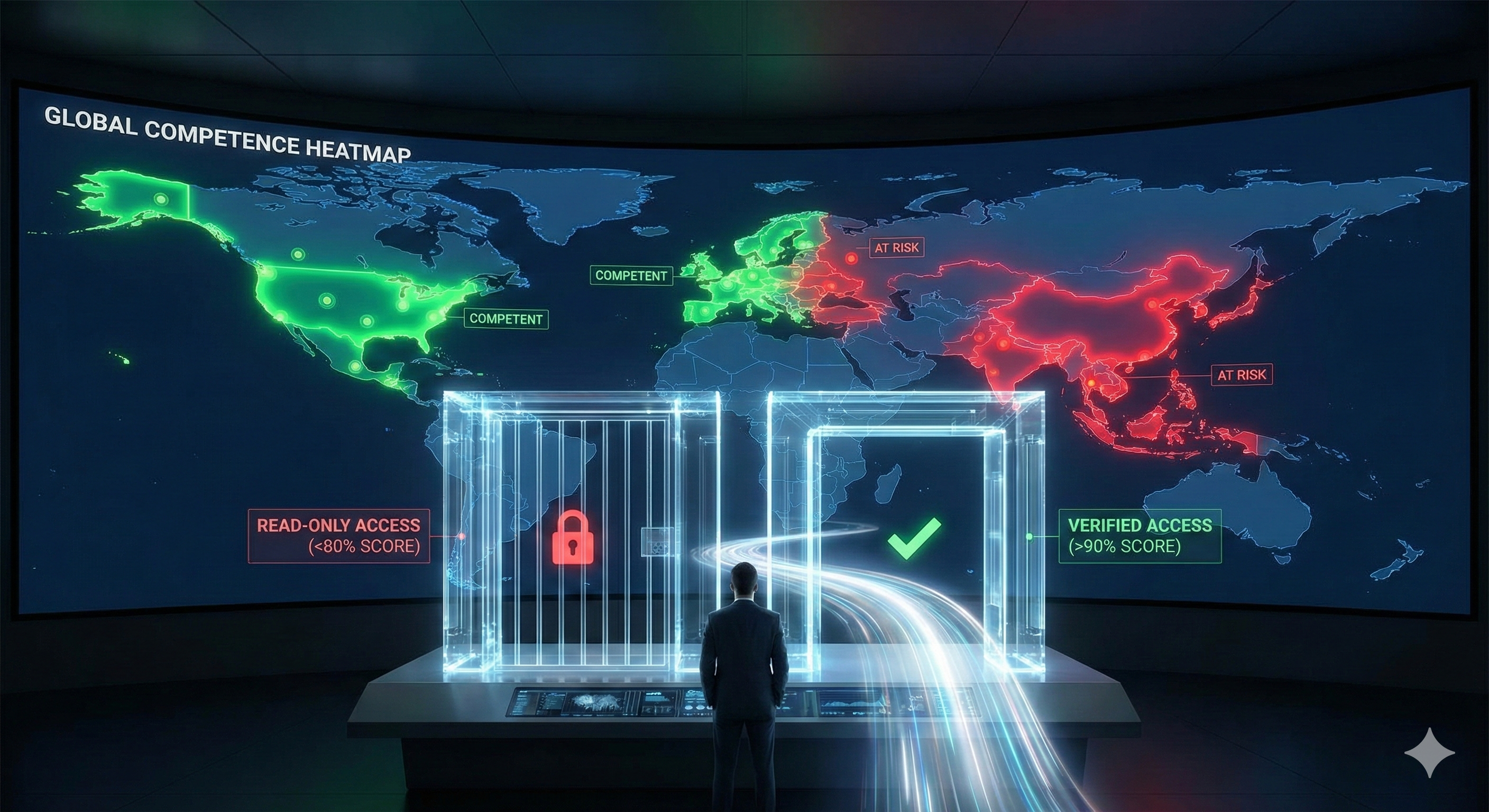
This unifies the talent lifecycle into a single, data-driven workflow visible to the C-Suite. We give leadership a live Competence Heatmap.
Crucially, we enable Permission Gating. Companies can now tie system permissions to Coffee AI scores:
- Score < 80%: Employee is "Read-Only." They cannot deploy autonomous agents.
- Score > 90%: Employee is "Verified." They unlock the ability to use advanced AI tools.
This turns "Shadow AI" from a risk into a managed, licensed capability.
Conclusion
The AI economy demands a new metric for talent. We are moving from "Credentials" to "Verified Judgement."
Coffee AI is the platform for this transition. By capturing the wisdom of your top performers, we allow you to clone that competence. We use it to retrain your current staff, protecting them from Cognitive Drift and Identity Collapse. And we use it to filter your incoming hires, ensuring you never hire a "paper tiger" again.
We are taking the guesswork out of human capital. We are giving companies the ability to scale their best people, literally.
References
[1] D. Autor, "The Paradox of Automation," Journal of Economic Perspectives, vol. 29, no. 3, pp. 3–30, 2015. [Online]. Available: https://www.aeaweb.org/articles?id=10.1257/jep.29.3.3
[2] Gartner, "Future of Work Trends 2025: The Shift to NudgeTech," Oct. 2024. [Online]. Available: https://www.gartner.com/en/documents/future-work-2025
[3] Microsoft Research and Carnegie Mellon University, "The Impact of Generative AI on Critical Thinking: Self-Reported Reductions in Cognitive Effort," Jan. 2025. [Online]. Available: https://www.microsoft.com/en-us/research/publication/the-impact-of-generative-ai-on-critical-thinking-self-reported-reductions-in-cognitive-effort-and-confidence-effects-from-a-survey-of-knowledge-workers/
[4] Telus Digital, "Shadow AI in the Enterprise Survey: The Hidden Risk," Feb. 2025. [Online]. Available: https://www.telusinternational.com/insights/reports/shadow-ai-2025
[5] J. Bersin, "The Rise of the Superworker: HR Predictions 2025," The Josh Bersin Company, Jan. 2025. [Online]. Available: https://gloat.com/blog/superworkers/